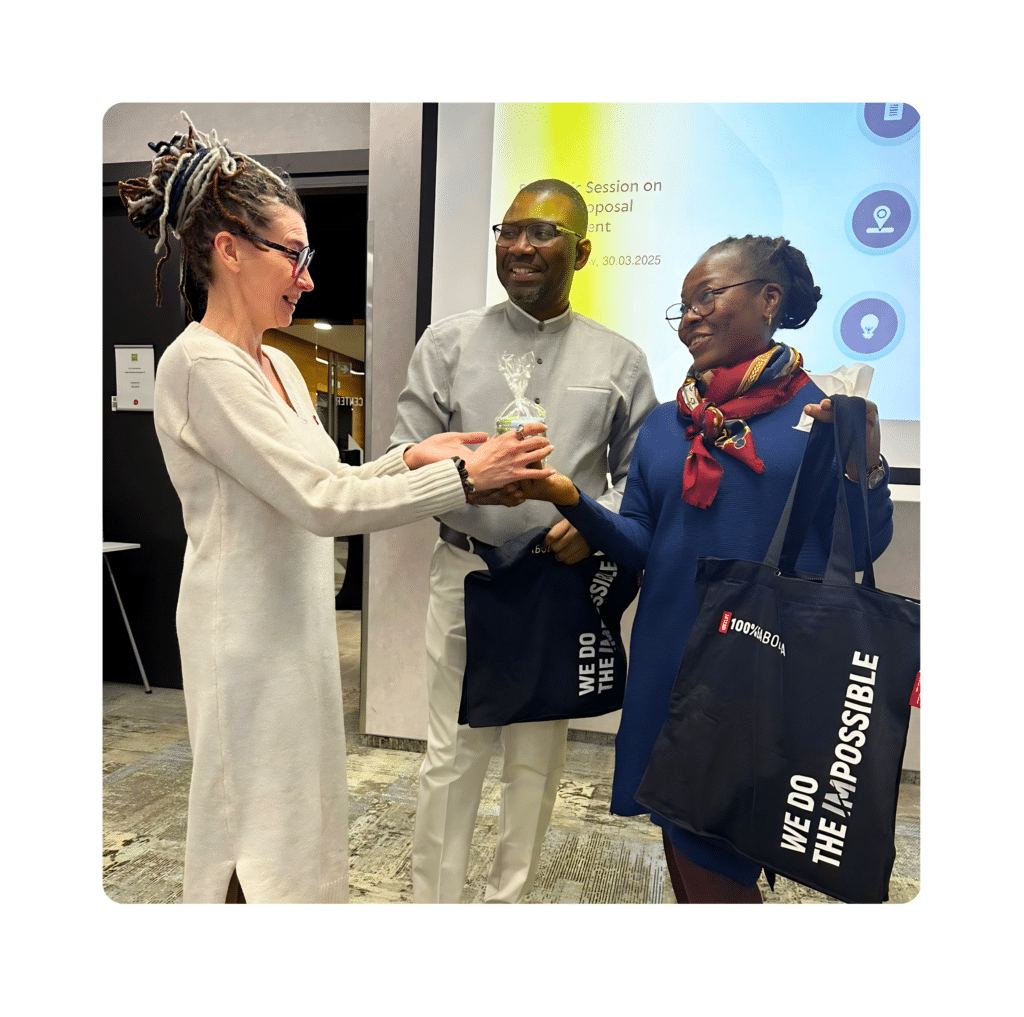
Cross‑Border Collaboration for a Shared Public Health Future
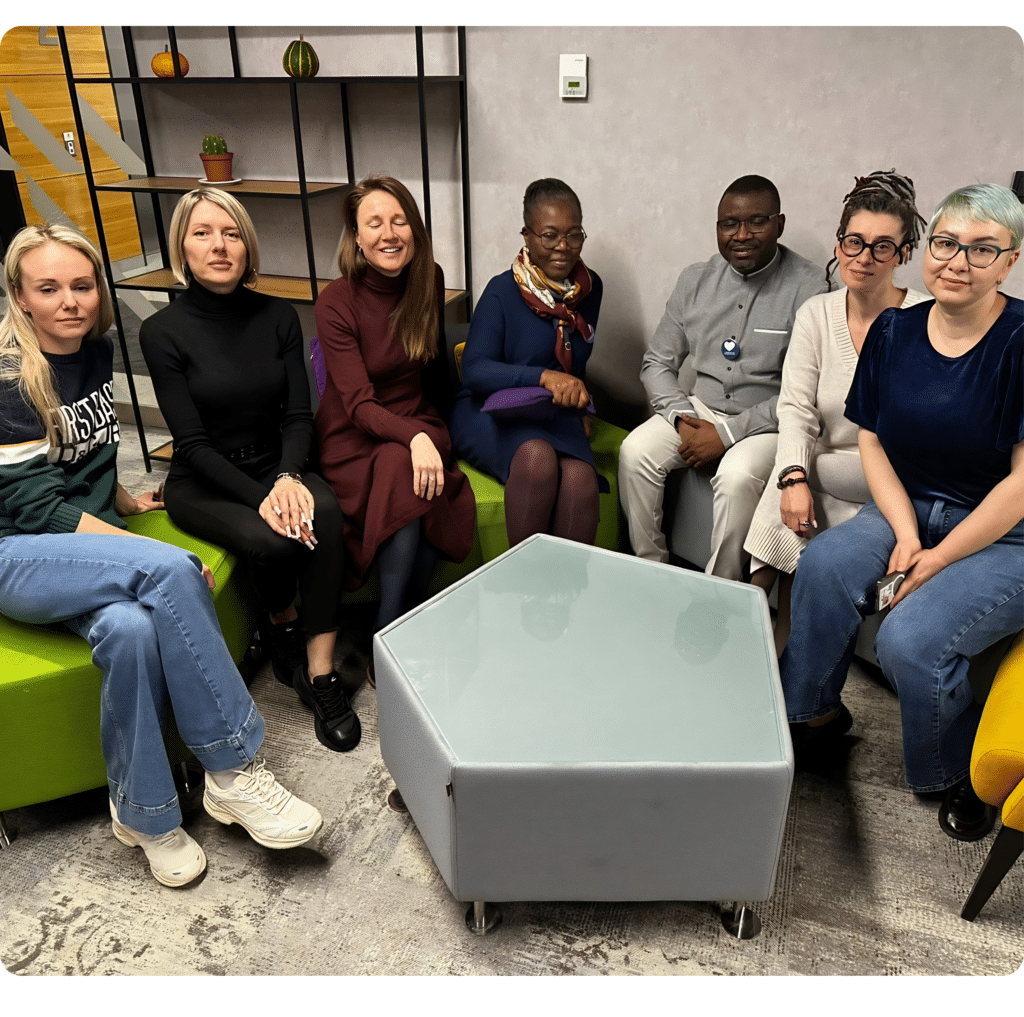
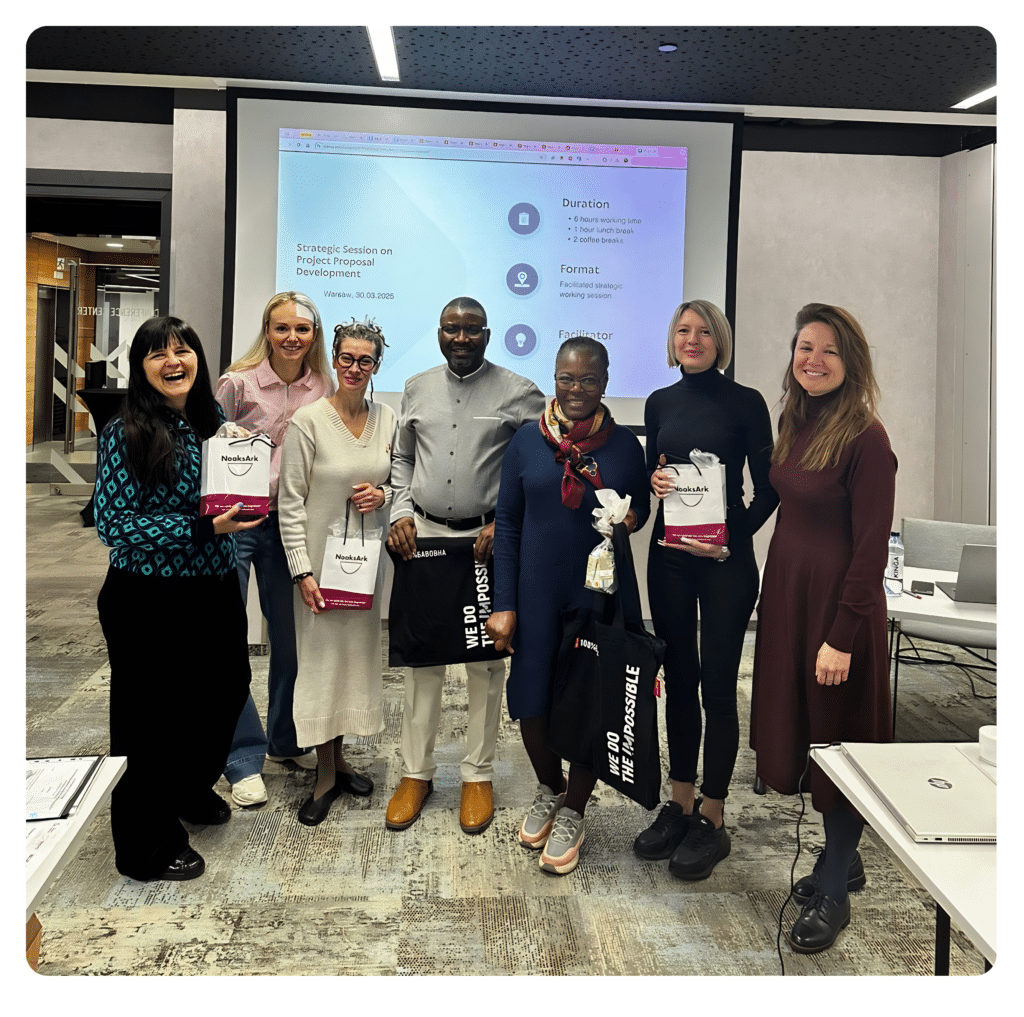
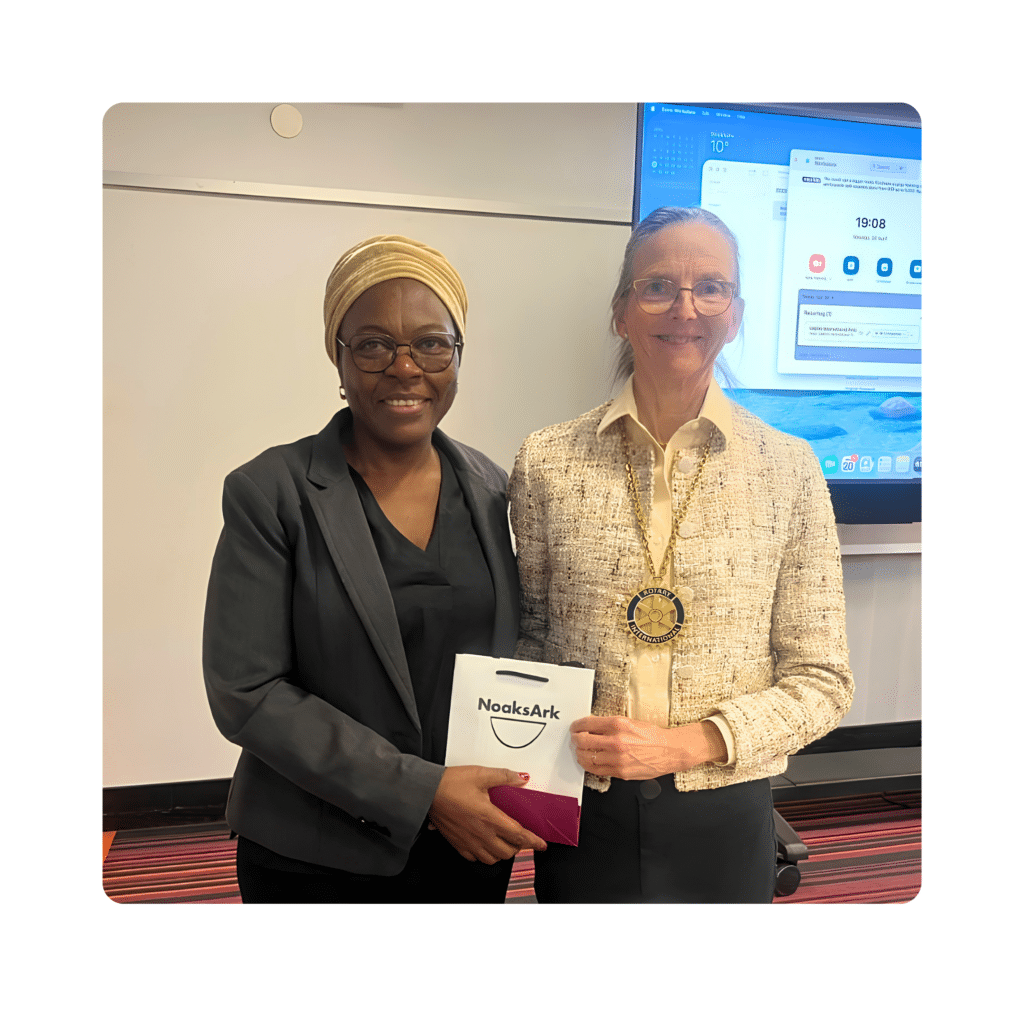
From 29 March to 1 April 2026, partners from Sweden, Ukraine, Poland and Germany gathered in Warsaw to strengthen cross‑border collaboration in HIV prevention and community health. The meeting brought together organisations committed to building more inclusive, responsive and people‑centred health systems across the region.
What Does It Take to Build Inclusive Health Systems?
What does it take to build health systems that truly leave no one behind? For those working at the intersection of migration and community health, the answer increasingly lies beyond national borders.
A Cross‑Border Partnership in Warsaw
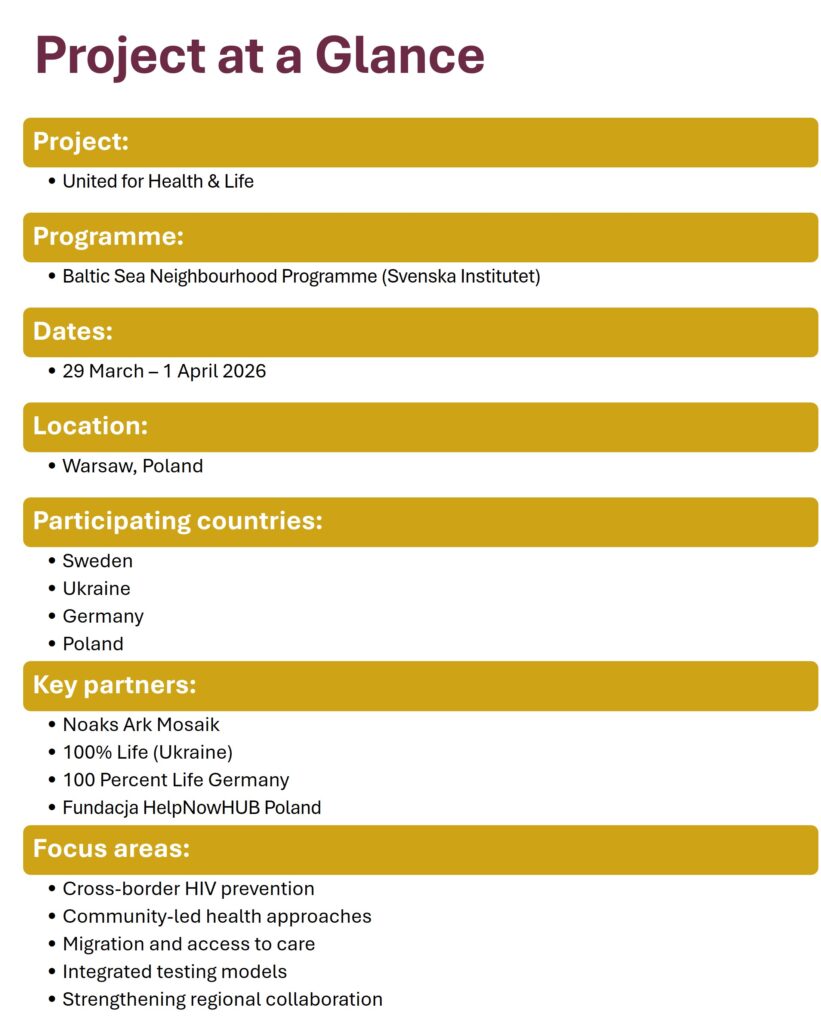
From 29 March to 1 April 2026, partners from Sweden, Ukraine, Poland, and Germany came together in Warsaw under the Baltic Sea Neighbourhood Programme for the “United for Health & Life” initiative. Organisations including Noaks Ark Mosaik, “100% Life”, and 100 Percent Life Germany joined forces to co-develop transnational solutions and share practices in HIV prevention across diverse contexts.
Strengthening a Shared Model
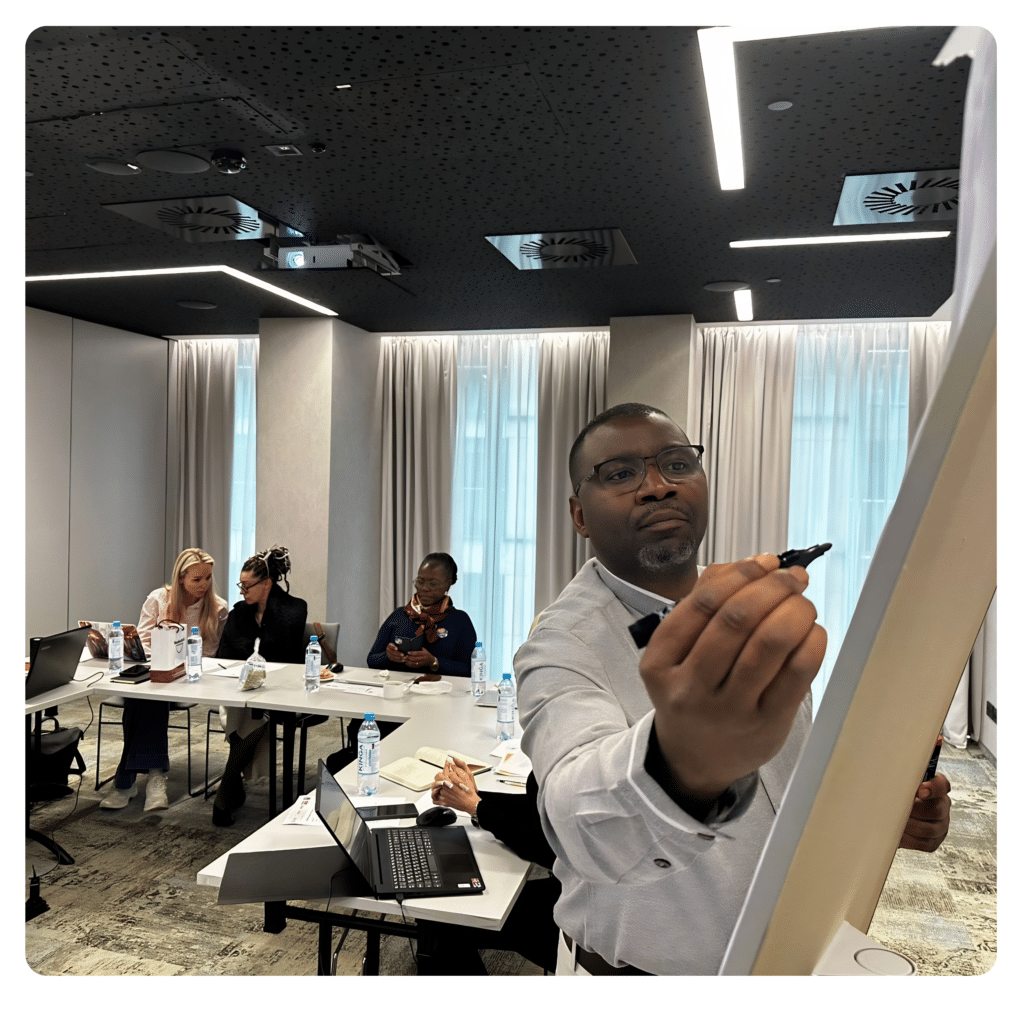
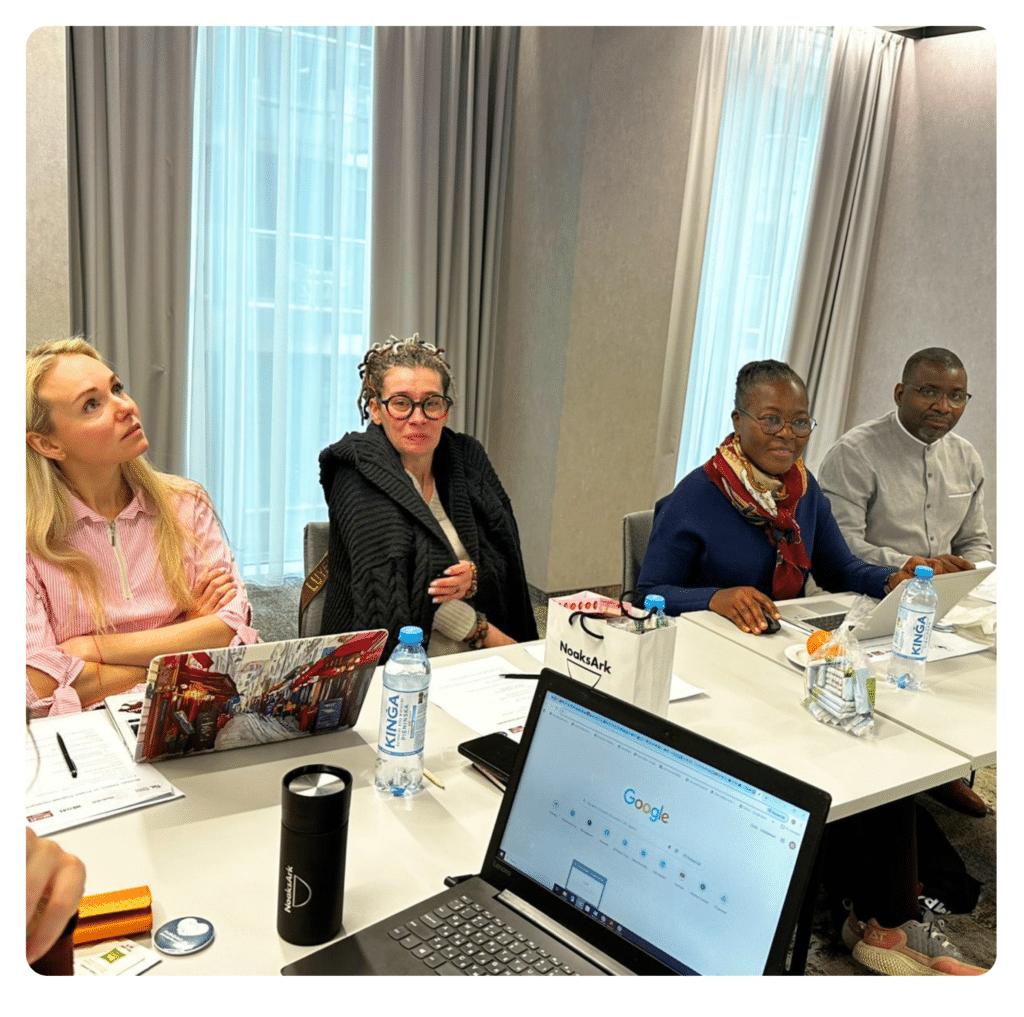
Over two intensive days of working sessions, the focus was on refining a shared project model, strengthening interventions, and clarifying roles across partners. These discussions were not abstract, they were grounded in the realities of reaching communities most affected by HIV, particularly migrants and mobile populations who often face fragmented access to care across borders. The meeting marked an important step in aligning strategic priorities and deepening trust across countries.
Learning from Community‑Led Spaces
Beyond the meeting room, Warsaw itself offered powerful lessons. A visit to Ramona, a well-known safe space for the city’s LGBTQ+ community, provided a vivid example of community-led health in action. In this setting, peer consultants offer HIV and STI testing, alongside counselling and support, demonstrating how trust, proximity, and cultural understanding can transform access to care. For the partners, this was more than an observation; it was a practical model of how community spaces can serve as critical entry points for health services.
Shared Learning with FES
The exchange continued the second day with the Polish organisation Fundacja HelpNowHUB Poland, where partners explored local approaches to working with vulnerable groups. These moments of shared learning highlighted an essential truth: effective HIV responses are built not only on policy, but on people, relationships, and context-sensitive approaches.
Bridging Systems Across Borders
At its core, United for Health & Life is about bridging systems that do not always speak to each other. While HIV prevention tools such as testing and PrEP are available across the region, access remains uneven. Structural barriers — legal status, stigma, language, and health system fragmentation — continue to shape who benefits and who is left behind.
Towards More Inclusive Pathways to Care
This initiative responds to these challenges by building a coordinated, cross-border approach rooted in community-led practice. Drawing on integrated testing models and outreach in diverse settings, the project aims to create more inclusive and responsive pathways to care. Just as importantly, it creates space for mutual learning, where partners from different systems contribute equally and learn from one another.
A Shared Commitment to Regional Health
The Warsaw meeting was a clear reminder that collaboration is not only possible, but also necessary. When organisations come together across borders, share experiences openly, and co-design solutions, they lay the foundation for more equitable and resilient health systems. This work is supported by the Swedish Institute under the Baltic Sea Neighbourhood Programme, reflecting a shared commitment to regional cooperation, sustainable, and inclusive health development.