Community outreach: Who is reached by the initiative?
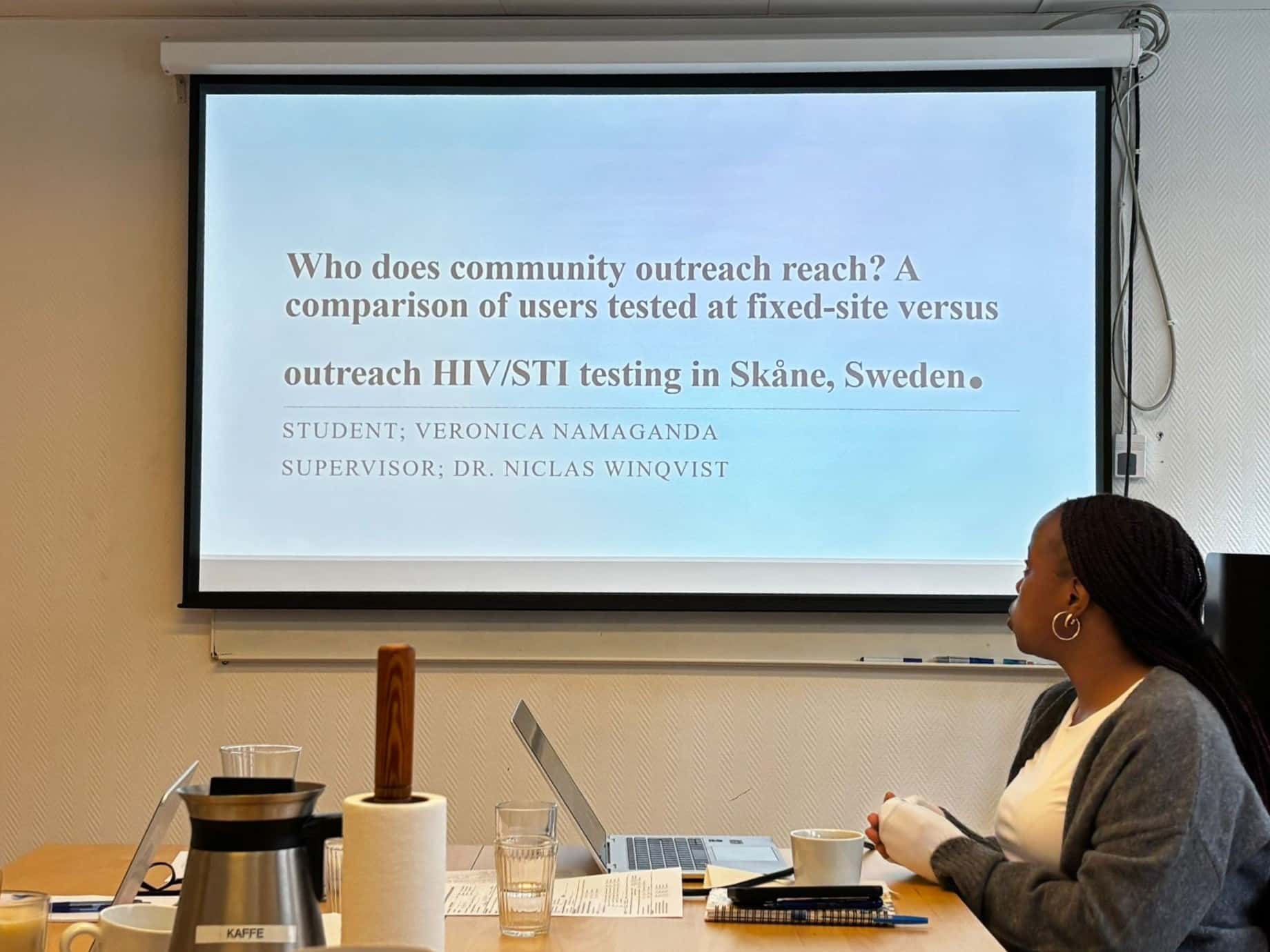
Who does community outreach reach? A comparison of fixed‑site versus outreach HIV/STI testing in Skåne, Sweden
Introduction
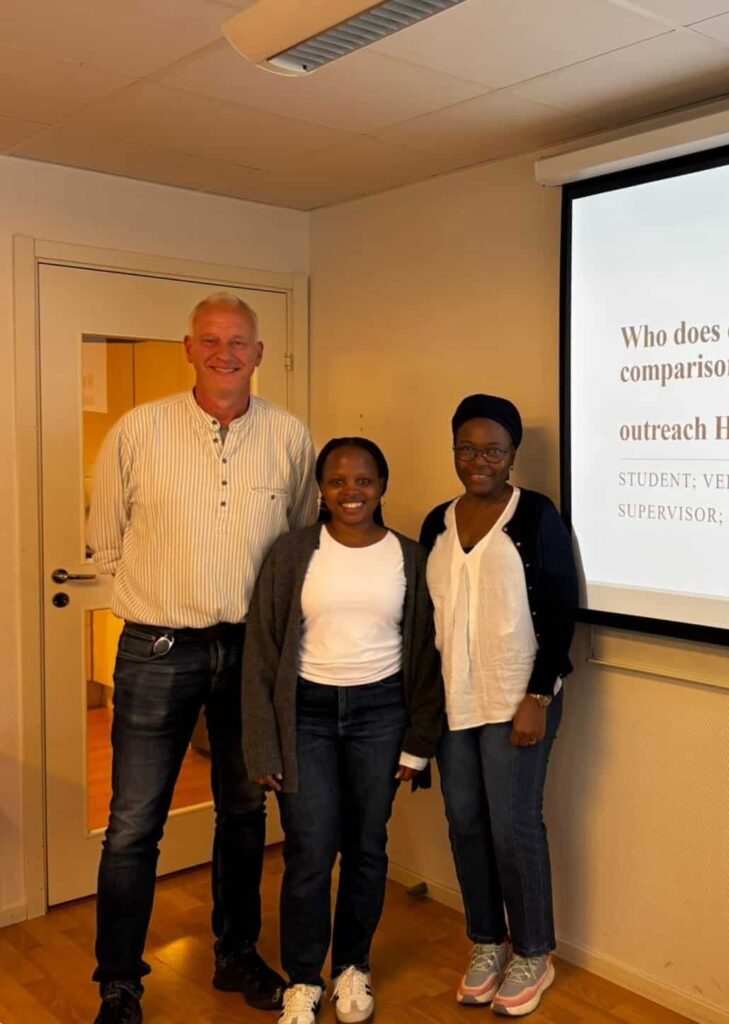
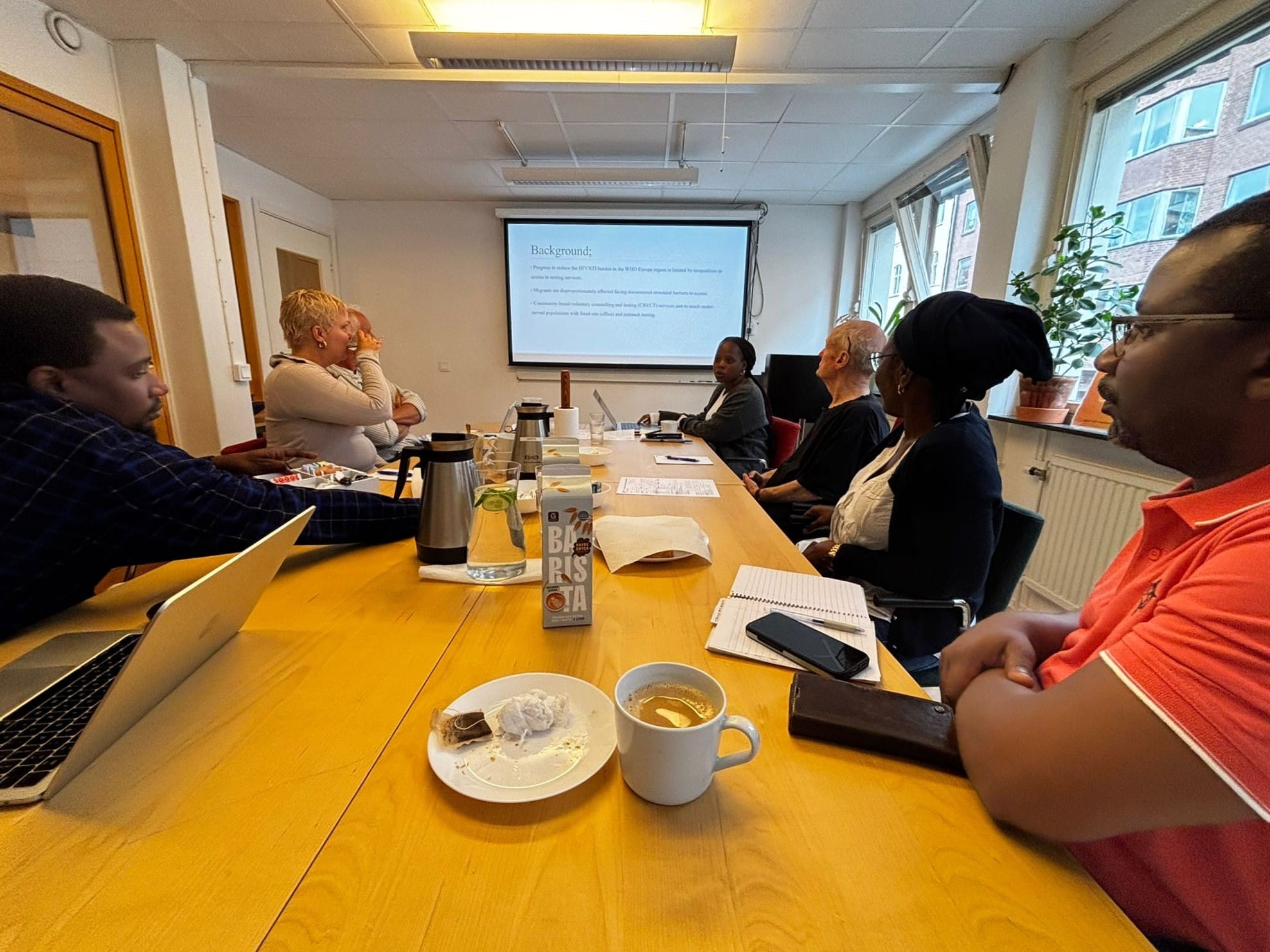
On Friday 28 August 2026, Master’s student Veronica Namaganda presented findings from her summer research conducted with Noaks Ark Mosaik. The study, supervised by Dr. Niclas Winqvist (Lund University, Faculty of Medicine), compares user profiles at fixed‑site testing and community outreach HIV/STI testing in Skåne. Importantly, the analysis draws on programme data collected through Noaks Ark Mosaik and the COBATEST Network Database, situating the research within routine community‑based service data rather than a small, convenience academic sample.
Background
Community outreach testing is widely promoted as a strategy to increase access to HIV/STI services among populations who may face barriers to conventional clinic‑based care. However, evidence on who is actually reached by outreach versus fixed‑site testing remains limited, particularly when analyses rely on routine service data. Understanding these differences is essential for assessing equity in testing provision and for tailoring services to underserved groups, including migrants and other marginalised populations in Skåne.
Study aims and methods
The primary aim was to characterise and compare the sociodemographic and testing‑related profiles of individuals tested via community outreach and those tested at a fixed site. The study used programme data generated by Noaks Ark Mosaik’s routine testing activities and harmonised variables from the COBATEST Network Database. Analyses focused on indicators relevant to access and vulnerability (e.g., migration background, age, gender, prior testing history), and compared distributions across the two testing modalities. The use of COBATEST data ensures comparability with other community testing programmes and anchors findings in routine operational metrics.
Key findings
- Outreach and fixed-site testing reach different populations. The two approaches are complementary rather than interchangeable.
- Outreach predominantly reaches migrants and people facing greater healthcare access barriers. 80% of outreach users were foreign nationals, with more reporting no or uncertain access to healthcare.
- Outreach reaches more first-time testers. People accessing outreach were more likely to report that they had never tested for HIV before.
- Motivation for testing differs by setting. Office testing was largely risk-triggered, with 76% reporting a risk exposure, while outreach was mainly proactive/routine, with 78% reporting no specific risk and testing simply to know their status.
- Outreach brings people to testing who would otherwise be less likely to seek the service. 82% reported using the service because it was available through the outreach setting.
- Fixed-site testing continues to serve important populations, including younger, Swedish-born users and relatively more MSM and gender-diverse users.
- Foreign nationality was the strongest predictor of outreach testing, reinforcing the role of outreach in reaching migrant populations.
- Disclosure was lower during outreach, potentially reflecting language barriers, shorter engagement time and privacy considerations. However, the sensitivity analysis showed that the main findings remained, suggesting the differences were not explained simply by differential disclosure.
Interpretation and implications
The findings underscore the value of community‑based outreach as a mechanism for improving equity in HIV/STI testing. By reaching people with migration backgrounds and those less connected to routine healthcare, outreach contributes to earlier detection and linkage to care for groups at elevated risk or with reduced access. For Noaks Ark Mosaik, the results validate the organisation’s model of integrating service delivery with evidence generation: routine outreach activities not only provide care but also produce actionable data that can inform service design and resource allocation.
Operationally, the study suggests several practical implications: (1) sustain and expand outreach efforts targeted at migrant communities and other underserved groups; (2) strengthen data collection and routine monitoring within outreach to track reach and outcomes over time; and (3) use programme data to iteratively refine outreach locations, times and partnership strategies to maximise reach and acceptability.
Limitations
As an analysis of routine programme data, the study is subject to limitations inherent to operational datasets, including variable completeness and potential selection biases. While COBATEST harmonisation mitigates some comparability issues, causal inferences about why individuals choose outreach versus fixed‑site testing cannot be drawn from cross‑sectional programme data alone. Future mixed‑methods work could elucidate motivations and barriers in greater depth.
Conclusion
Veronica Namaganda’s study provides timely, practice‑rooted evidence that community outreach testing in Skåne reaches populations who are less likely to access fixed‑site services, notably people with migration backgrounds. The research exemplifies Noaks Ark Mosaik’s approach to community‑led evidence generation, demonstrating how routine service activities can yield robust insights to guide equitable public health practice.
Acknowledgements
This work was conducted with support from a Lund University grant and supervised by Dr. Niclas Winqvist.
We thank Veronica Namaganda for her rigorous analysis and presentation, and the Noaks Ark Mosaik staff for providing the programme data and for their ongoing collaboration.